


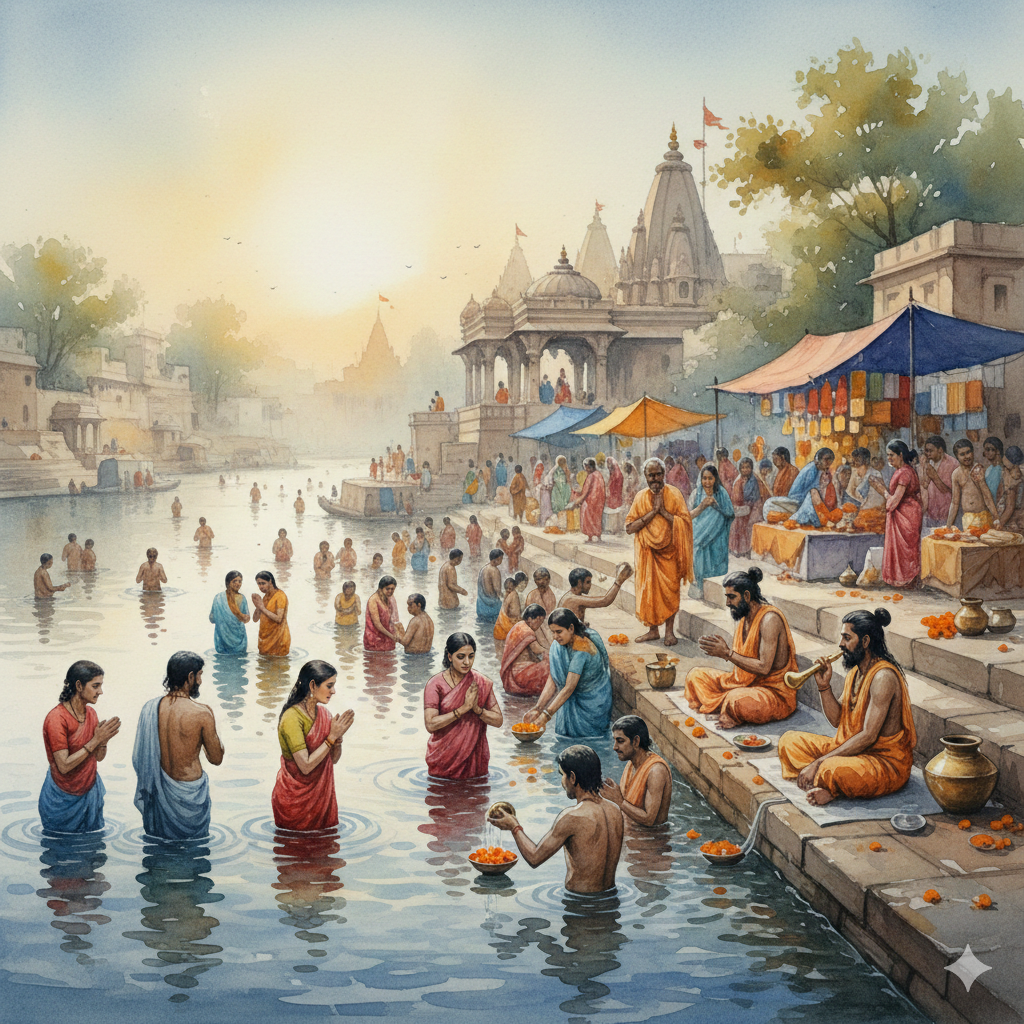
In Indian tradition, ‘Pushkara’ is a highly sacred religious observance dedicated to the worship of rivers.
The word ‘Pushkara’ refers to the time when a river is infused with special spiritual energy. According to Vedic astrology, a Pushkara occurs for a specific river when Brihaspati (the planet Jupiter) enters a particular zodiac sign.
It is a firm belief that during this time, taking a holy dip (snana) in the river and offering ancestral rites (tarpana) washes away sins and bestows divine merit (punya).
The 12 Rivers and Zodiac Signs
According to Indian astrology, each of the 12 major holy rivers is associated with a specific zodiac sign. When Jupiter enters these signs, the Pushkara for the respective river begins:
| Zodiac Sign | River |
| Aries (Mesha) | Ganga |
| Taurus (Vrishabha) | Narmada |
| Gemini (Mithuna) | Saraswati |
| Cancer (Kataka) | Yamuna |
| Leo (Simha) | Godavari |
| Virgo (Kanya) | Krishna |
| Libra (Tula) | Kaveri |
| Scorpio (Vrischika) | Tamraparni |
| Sagittarius (Dhanus) | Sindhu (Indus) |
| Capricorn (Makara) | Tungabhadra |
| Aquarius (Kumbha) | Bhima |
| Pisces (Meena) | Pranahita |
Duration and Timing
Jupiter remains in one zodiac sign for approximately one year.
- Adi Pushkara: The first 12 days of the year (when Jupiter enters the sign).
- Antya Pushkara: The last 12 days of the year (before Jupiter moves to the next sign). The performance of baths (snana), charities (dana), and prayers (puja) during these windows holds immense spiritual significance.
Cultural Importance
Beyond being a religious ritual, Pushkara is a social congregation that brings thousands of devotees together. It fosters a sense of devotion toward nature and highlights the importance of preserving and protecting our sacred rivers.


Leave a Reply